Editorial / technical guide
This page is educational content, not a documented customer project.
Blast Window Film vs. Safety Glazing: Complete Performance Comparison
Technical Abstract
Blast window film vs safety glazing comparison: costs, performance, installation time, and protection levels. Film is 70-80% cheaper and installs in days.
- Blast window film costs 70-80% less than laminated glazing replacement and installs in days instead of weeks
- Film achieves Level C protection with wet-glaze, Level B with mechanical anchors; glazing goes higher
- Hybrid approaches (film on upper floors, glazing on ground level) offer the best cost-to-protection ratio
- Choose film for retrofits and tight budgets; choose glazing for new construction or Level D/E requirements
Key Technical Chapters
When protecting a building against blast threats, facility managers face a critical decision: retrofit existing windows with blast-resistant film, or replace them entirely with safety/laminated glazing. Both options offer real protection — but they differ dramatically in cost, installation time, and performance characteristics. This comparison breaks down everything you need to know to make the right choice.
Looking for commercial window tint installers?
How Blast Window Film Works
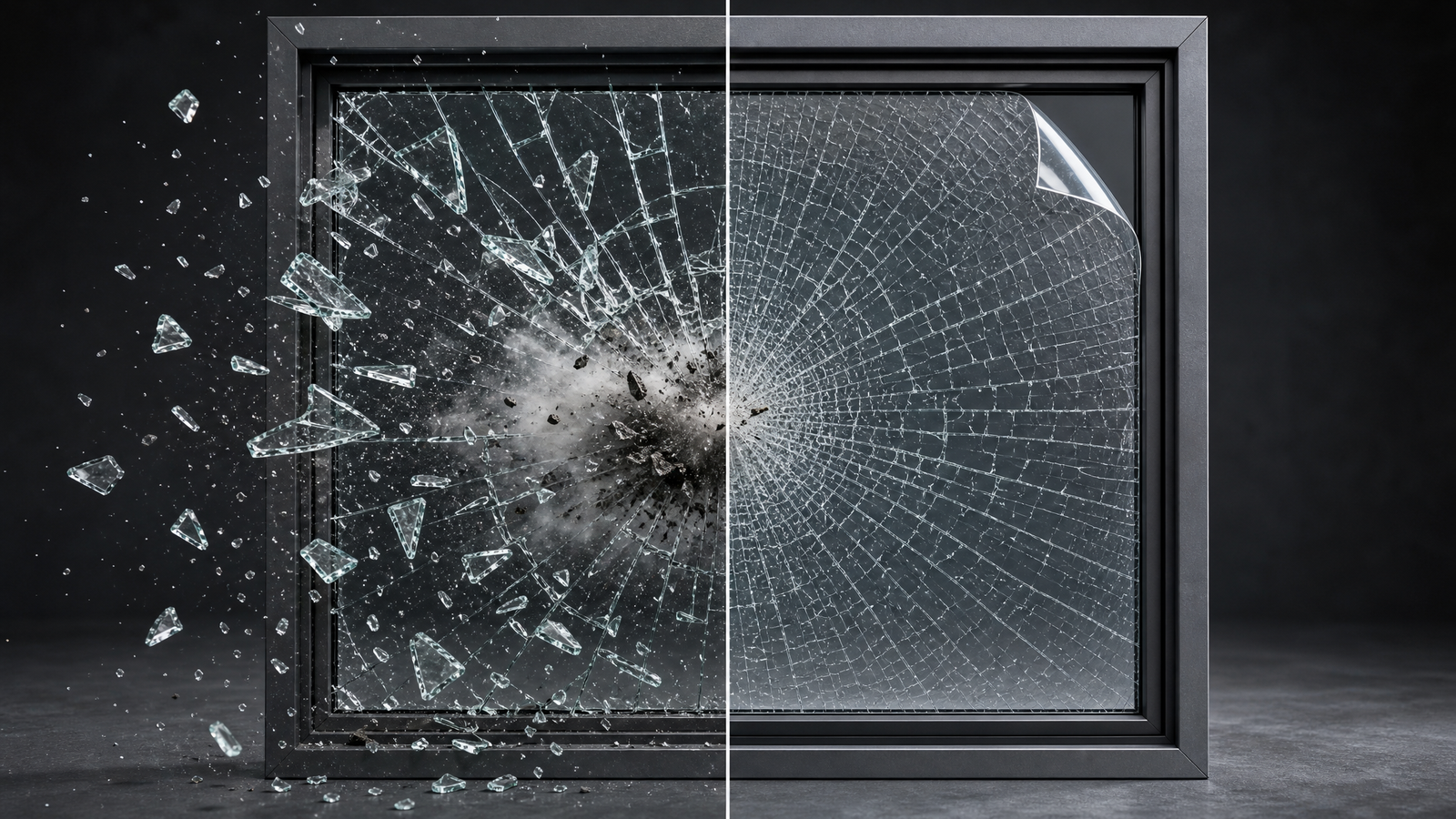
Blast window film is a thick (8-15 mil), multi-layer polyester film applied to the interior surface of existing glass. It's secured to the window frame using a structural attachment system (wet-glaze or mechanical anchor). Under blast pressure, the film holds shattered glass fragments together — preventing dangerous spall (flying glass shards) that causes the majority of blast injuries. The film stretches to absorb energy while keeping the glass intact within the frame.
How Safety/Laminated Glazing Works
Laminated safety glazing consists of two or more glass panes bonded together with an interlayer (typically polyvinyl butyral or ethylene-vinyl acetate). The interlayer holds the glass together when broken. For blast applications, laminated glazing is typically thicker, uses specialized interlayers, and is installed as a complete window unit with a reinforced frame. It's effectively a permanent engineered solution built from the ground up for blast resistance.
Side-by-Side Comparison
- Upfront Cost: Film $8-20/sq ft | Glazing $45-120/sq ft — Film is 70-80% cheaper
- Installation Time: Film 1-3 days typical floor | Glazing 2-6 weeks per floor (each window measured, manufactured, installed)
- Blast Performance: Film Level C with wet-glaze, Level B with mechanical anchor | Glazing Level A-E depending on specification
- UV Protection: Both offer the product-specific UV performance rejection with proper film/glazing
- Retrofit Feasibility: Film requires no structural changes | Glazing may require frame replacement, structural upgrades
- Maintenance: Film needs reapplication every 15-20 years | Glazing lasts 25-40 years with seal maintenance
- Optical Clarity: Slight haze possible with thicker films | Superior clarity with laminated glazing
- Occupant Disruption: Minimal (film applied on-site during business hours) | Major (requires window removal, possible asbestos abatement)
When to Choose Film vs. When to Replace Glass
Choose blast window film when: Budget is limited, rapid installation is needed, the building can't be emptied, existing glass and frames are in good condition, and you need Level C or lower blast protection.
Choose laminated safety glazing when: You need Level D or E protection, frames are being replaced anyway, new construction, the budget supports the investment, or the building has historic value requiring specific glazing solutions.
Hybrid Approaches — Using Both
Many government facilities now use a hybrid approach: blast film on less critical perimeter areas and laminated glazing on high-threat zones (entrances, ground-floor street-facing windows). This balances cost and protection effectively. For example, a federal office building might use 12 mil blast film with mechanical anchors on upper floors (Level C protection) and laminated glazing on the ground floor entrance (Level D).
Cost Analysis: 50,000 sq ft Building
For a typical 50,000 sq ft government office building with approximately 10,000 sq ft of glazing:
- Blast Film Option (Level C): $80,000-$160,000 installed. Timeline: 1-2 weeks. Disruption: Minimal.
- Laminated Glazing Replacement (Level D): $450,000-$1,200,000 installed. Timeline: 8-16 weeks per floor. Disruption: Significant.
- Hybrid Approach: $180,000-$350,000. Glazing on ground floor, film on upper floors. Timeline: 4-8 weeks.
Conclusion
Blast window film offers a cost-effective, rapid retrofit solution for buildings requiring Level C or below protection — which covers most government and commercial applications. Laminated glazing is the superior option for Level D/E threats and new construction. For most existing buildings, a hybrid approach provides the best balance of protection and budget.
Need help deciding which solution fits your building? Contact us for a facility assessment.
Find Commercial Window Tinting Near You
Browse installers by city — get matched with commercial window film specialists in your area.
Technical FAQ
Is blast window film as good as laminated safety glass?
For Level C protection (the standard for most federal buildings), quality blast film with proper attachment performs similarly to laminated glass. For Level D and above, laminated glazing outperforms film.
Does blast film damage windows over time?
No — when professionally installed with proper attachment systems, blast film can actually protect glass from thermal stress and minor impacts. The film is removable without damaging the glass.
How long does it take to install blast film vs replace with safety glazing?
Blast film installation takes 1-3 days per floor. Replacing with laminated glazing takes 2-6 weeks per floor, including measurement, custom manufacturing, and installation.
Can I combine film and glazing in the same building?
Yes — hybrid approaches are increasingly common. High-threat areas (ground floor, entrances) get laminated glazing while upper floors and less critical areas get blast film, optimizing both protection and budget.
Ready to optimize your facility?
Review available company information in the directory and prepare a project brief for suppliers.