TechnicalUpdated May 2026•6 min read
Editorial / technical guide
This page is educational content, not a documented customer project.
Ceramic vs. Metalized Window Film: Technical Comparison
Technical Abstract
Ceramic vs. Metalized Window Film: Technical Comparison for Commercial Retrofits.
- Ceramic film offers signal transparency and superior clarity for high-tech office buildings.
- Sputtered metallic film provides maximum heat rejection at a lower cost for large-scale projects.
- Select based on building infrastructure: signal interference needs vs. budget and TSER performance.
- A professional glazing audit is mandatory to avoid thermal stress risks.
Key Technical Chapters
Technical Overview
Industry Standards
ROI Analysis
Implementation
Technical FAQ
What is the main difference between ceramic and metalized window film?
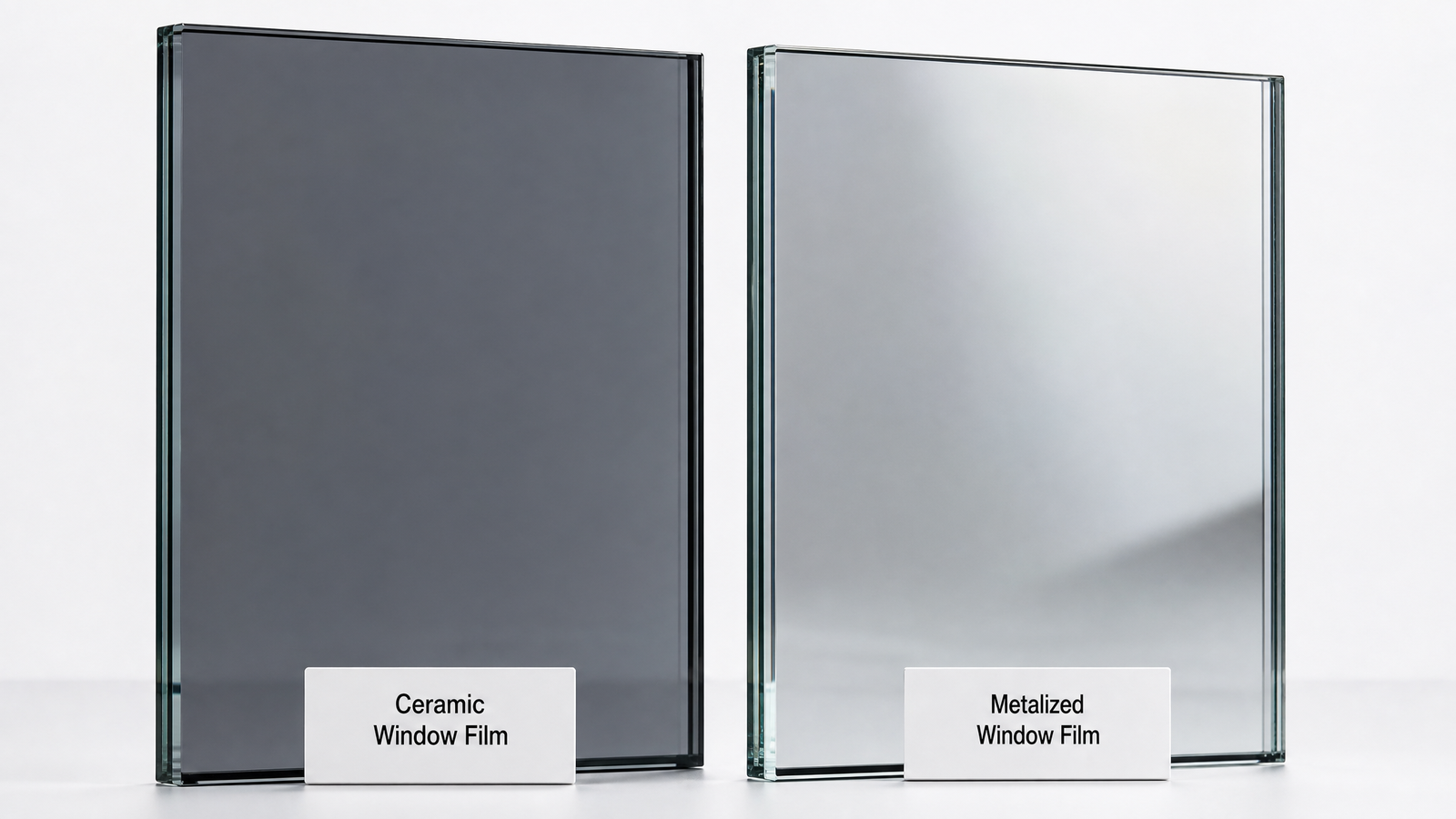
The primary difference is the technology: metalized films use metallic layers for heat rejection (potentially causing signal interference), while ceramic films use non-metallic particles to reject heat without affecting connectivity.
How do I choose between ceramic and metalized films for my commercial project?
Choose ceramic if you require signal transparency (Wi-Fi/GPS), long-term color stability, or aesthetic neutrality. Choose metalized if maximizing heat rejection per dollar is the priority for large-scale retrofits.
Ready to optimize your facility?
Review available company information in the directory and prepare a project brief for suppliers.