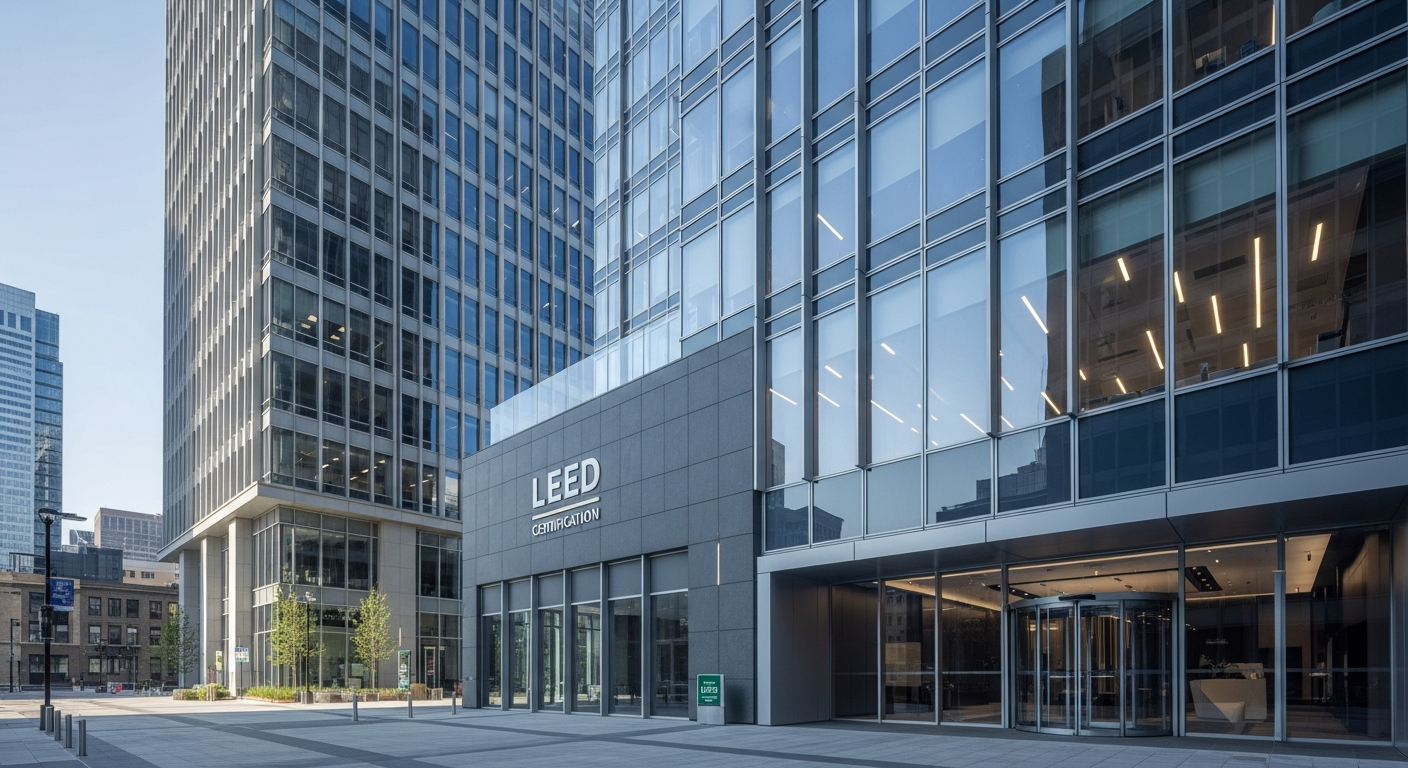
Editorial / technical guide
This page is educational content, not a documented customer project.
Meeting LEED & ESG Standards with Architectural Window Film
Technical Abstract
Architectural window film is a powerful tool for meeting ESG mandates and LEED certification. This strategy guide explores how window film contributes to Energy and Atmosphere credits, improves NABERS ratings, and provides a rapid ROI through operational carbon reduction.
- Window film can contribute up to 18 points in the LEED 'Optimize Energy Performance' category.
- Reduces HVAC cooling loads by 10-30%, directly impacting Scope 2 carbon emissions.
- Improves tenant retention and 'Social' ESG scores by eliminating hot spots and glare.
- Offers a a project-specific payback period period, significantly faster than glazing replacement or HVAC overhauls.
Key Technical Chapters
The Role of Window Film in Decarbonization
As corporate ESG (Environmental, Social, and Governance) mandates tighten, commercial real estate owners are under intense pressure to reduce Scope 2 emissions and improve energy intensity. Architectural window film has emerged as one of the most cost-effective 'low-hanging fruits' for building retrofits. Unlike complex HVAC upgrades or glazing replacements, window film can be deployed across a 40-story asset without tenant displacement, providing immediate impacts on LEED v4.1 certification and NABERS ratings.
Looking for commercial window tint installers?
LEED Credits and Window Film Application
U.S. Green Building Council's LEED certification recognizes the impact of high-performance envelopes. Window film directly contributes to several key credit categories:
1. Energy and Atmosphere (EA): Optimize Energy Performance
This is the most significant credit category. Window films reduce solar heat gain coefficients (SHGC) by up to 60%. By lowering the cooling load, buildings can achieve a 5% to 15% reduction in annual energy spend. In the LEED v4.1 framework, this translates directly to points under the 'Optimize Energy Performance' credit, which can account for up to 18 points toward certification.
2. Indoor Environmental Quality (EQ): Thermal Comfort
Tenant complaints are often driven by 'hot spots' near windows. Window film levels out the thermal gradient across a floor plate. Meeting the requirements of ASHRAE Standard 55 for thermal comfort is a prerequisite or credit-earning activity in many LEED projects. By reducing radiant heat transfer, window film ensures the 'Social' aspect of ESG is addressed through improved occupant productivity and health.
3. Indoor Environmental Quality (EQ): Daylight and Quality Views
While solar control is vital, LEED rewards projects that maintain a connection between occupants and the outdoors. Advanced spectrally selective films (like 3M Prestige or LLumar Vista) allow for high VLT while blocking heat. This allows facility managers to achieve 'Daylight' credits without the penalty of excessive glare or thermal discomfort that typically accompanies large glazing areas.
ESG Reporting and Carbon Footprint Reduction
For REITs and institutional owners, the goal is Operational Carbon Reduction. Window film provides a rapid 'Payback Period'—often less than 3 years—compared to 15-20 years for new double-glazing. Every kilowatt-hour saved by reducing the HVAC load translates into a direct reduction in the building's carbon footprint. This data is increasingly critical for GRESB (Global Real Estate Sustainability Benchmark) reporting and attracting high-value corporate tenants with their own Net Zero targets.
NABERS and International Standards
In markets like Australia, the NABERS (National Australian Built Environment Rating System) is the gold standard for operational efficiency. A 0.5 to 1-star improvement in a NABERS rating can increase a building's capital value by 5% to 10%. Window film is a primary strategy for 'tuning' a building's performance to reach that next star level without capital-intensive plant upgrades.
Strategic Implementation for Facility Managers
To maximize ESG impact, implementation should follow a Siloed Thermal Analysis. Start with the 'Money Elevations'—the West and East faces of the building that experience the highest peak loads. By addressing these specific zones, facility managers can significantly reduce 'Peak Demand' charges from utility providers, which often represent a disproportionate amount of the monthly energy bill.
Conclusion: The Capital Expenditure (CAPEX) Case
Investing in architectural window film is no longer just a maintenance expense; it is a strategic CAPEX investment in the building's long-term valuation. By improving LEED scores, reducing carbon emissions, and enhancing tenant comfort, window film addresses all three pillars of the ESG framework while providing a documented, high-yield ROI.
Find Commercial Window Tinting Near You
Browse installers by city — get matched with commercial window film specialists in your area.
Technical FAQ
Can window film help my building move from a 4-star to a 5-star NABERS rating?
Yes. By reducing the overall thermal load, window film improves the building's energy intensity ratio, which is the core metric for NABERS star ratings.
Does window film count toward LEED 'Daylight' credits?
Yes, provided you use spectrally selective films that maintain high VLT while reducing glare to levels acceptable under LEED EQ credit requirements.
How do I calculate the carbon reduction for my ESG report?
Most professional installers provide an Energy Audit using tools like DOE-2 or EFilm, which converts kWh savings into CO2e (Carbon Dioxide Equivalent) tons based on your local grid's emission factors.
Ready to optimize your facility?
Review available company information in the directory and prepare a project brief for suppliers.